This article is general guidance, not legal advice. Your city, county, or water district has the final word on setbacks, barriers, and fees. That said, after years of coordinating pool and hardscape work from Longmont through the north Denver metro, we see the same pattern of questions, and the same preventable delays.
The usual permit pathway
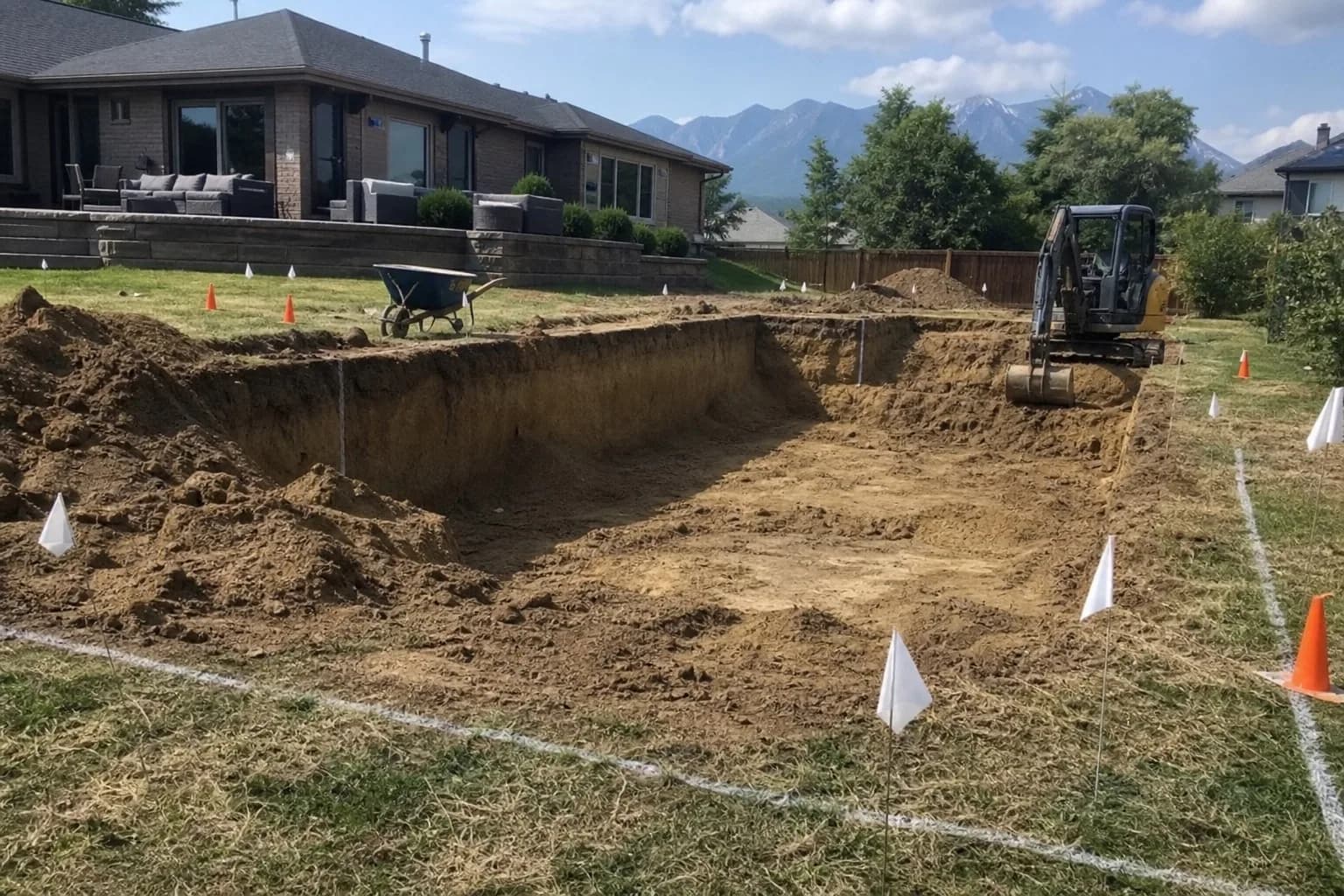
Most projects move through a version of this sequence: plans and engineering (pool and sometimes structural walls), building permit application, electrical permit (often separate), HOA approval if applicable, utility locates, excavation and steel inspections, plumbing pressure tests, bond beam / shotcrete inspections for concrete pools, equipment bonding, final electrical, and final building. Fiberglass routes still hit many of the same electrical and barrier checkpoints.
Inspections that actually pause work
Steel and shotcrete holds: Missing a scheduled inspection can idle a crew for days. We build realistic float into schedules because Front Range inspection calendars fluctuate.
Electrical panel capacity: Adding a heat pump, chiller lines, or multiple pump sets may require service upgrades. That work has its own permit path.
Utility conflicts: Gas line depth, sewer crossings, and irrigation mains are not “pool adjacent trivia.” Locates must be complete before machine work.
Setbacks, easements, and overlays
Pools near property lines, wetlands, or hillside drainage channels may trigger additional review. If you are close to a boundary, ask early whether setback relief or a survey is required. A few feet of uncertainty is expensive to discover after the hole is open.
Barriers and gates
Colorado communities generally take pool barriers seriously. Mesh rules for fence height, self-closing gates, and alarm devices change with code adoption. Plan the barrier path with your pool and landscape team so it does not fight your preferred patio flow.
How hardscape partners help
Rock N Roll Stoneworks often coordinates deck drainage, bond beam coping, and pool deck materials with the shell builder so inspections see a coherent system rather than a patchwork. If you are early in planning, read fiberglass vs concrete and pool cost ranges, then contact us to align pool and patio scopes before permits lock assumptions in place.
Frequently Asked Questions
Who issues the pool permit? Usually your city or county building department. Some jurisdictions split building and electrical permits. HOA design review may run in parallel but does not replace municipal permits.
Why do pool schedules slip even when the weather is fine? Inspection queues, revised engineering, utility conflicts, and incomplete plan sets are common. Starting utility locates and plan approvals early reduces idle crew time.
Do I need a fence before I can fill the pool? Most Colorado communities require compliant barriers before final approval or before the pool can be placed into service. Requirements vary, confirm with your local authority.