A properly installed paver patio should last forty or fifty years with minimal maintenance. We know this because properly installed paver systems in Europe have done exactly that for generations. So why do so many paver installations along the Front Range fail within five years?
The answer is almost always the same: shortcuts in the parts of the job you cannot see.
Failure #1: Insufficient Base Depth
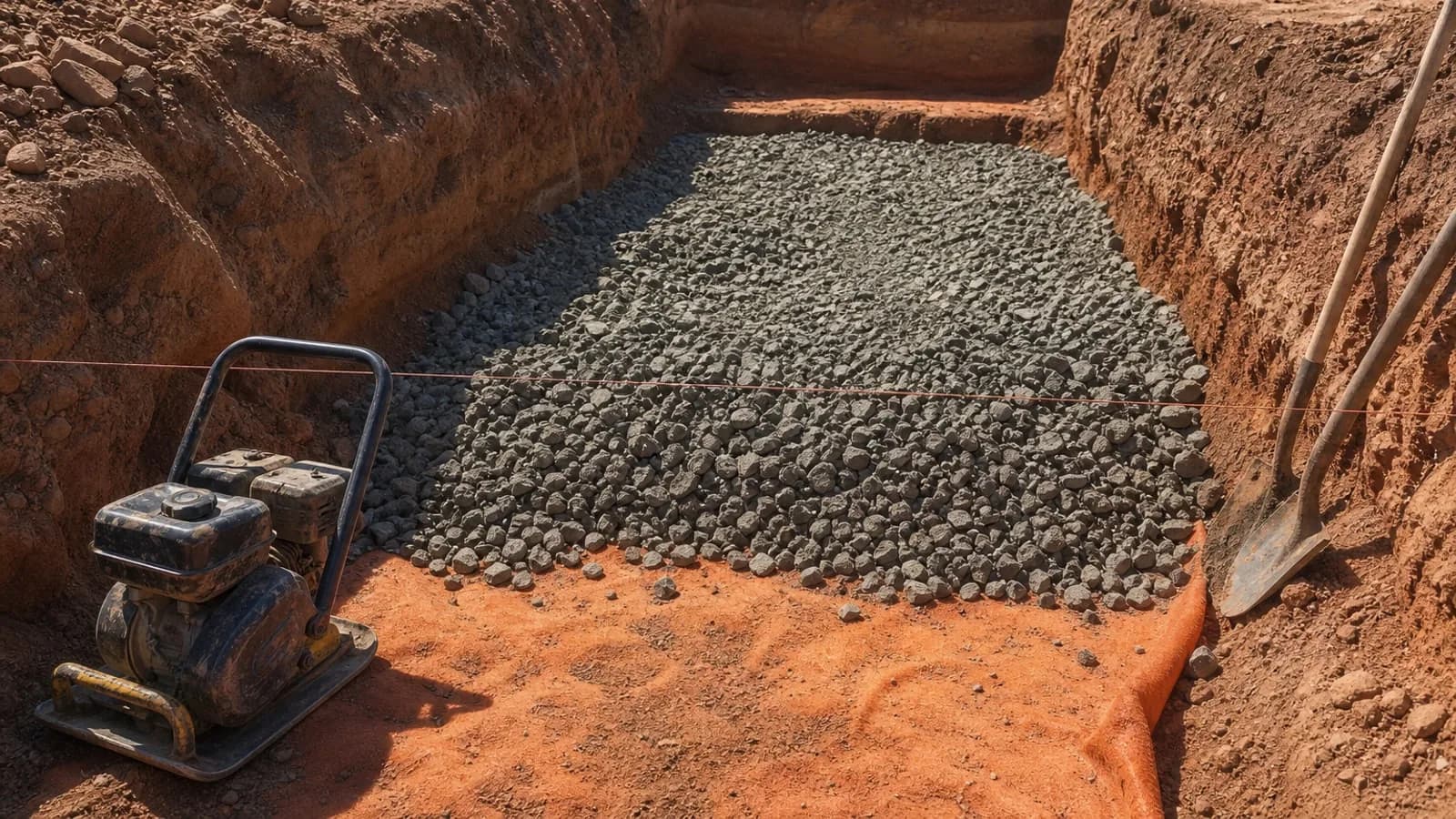
This is the most common failure mode in Colorado. A paver surface is only as stable as what is underneath it. In our climate, with its freeze-thaw cycling and expansive clay soils in many areas, the base aggregate needs to be deeper than in more stable markets.
ICPI, the trade association for the paver industry, recommends a minimum base depth of six inches of compacted aggregate for residential pedestrian areas in most applications. In areas with known poor drainage or heavy clay, eight inches or more is appropriate. Many low-bid contractors install two to four inches, because aggregate material and the labor to compact it properly are expensive and time-consuming.
When the base is too shallow, it does not resist the forces acting on it. Pavers settle unevenly, joints open up, and the surface becomes a trip hazard. In Colorado's freeze-thaw conditions, inadequate base depth accelerates this dramatically.
What to ask your contractor: How deep is your aggregate base going to be? What base material are you using? How many passes with what compaction equipment?
Failure #2: No Geotextile Fabric
Geotextile fabric, installed between the native soil and the aggregate base, prevents the native soil from migrating up into the aggregate over time. Without it, Colorado's clay soils gradually contaminate the base, reducing its drainage capacity and structural integrity.
This is a relatively inexpensive material, but it takes time to install correctly and is easy to skip since no one sees it. Many budget contractors skip it.
What to ask: Are you installing a geotextile fabric between the subgrade and base aggregate?
Failure #3: Wrong Sand Application or Depth
The bedding sand layer, the inch or so of coarse sand that pavers sit on and are set into, has specific requirements. It should be coarse concrete sand, not fine masonry sand or play sand. It should be approximately one inch deep, no more. It should be screeded smooth before pavers are placed.
Contractors who use the wrong sand type, lay it too deep, or skip screeding create a surface that will settle unevenly from the start. We have seen installations where contractors used play sand from a hardware store because it was cheap. Those patios look bad within one season.
What to ask: What type of sand are you using for bedding? What depth?
Failure #4: Missing or Inadequate Edge Restraints
Edge restraints hold the perimeter pavers in place and prevent the entire field from spreading outward over time. Without them, pavers migrate outward, joints open, and the surface becomes unstable.
Plastic edge restraints should be spiked into the base aggregate every six to twelve inches. On curves, spacing should be tighter. The restraints should extend the full perimeter of the installation, including against any fixed structures.
We occasionally see installations where edge restraints were used only on exposed edges but not against the house foundation, or where they were spiked inconsistently. Joints open at those weak points first.
Failure #5: Polymeric Sand Not Properly Installed
Polymeric sand is the joint material that binds together and hardens once wet. It prevents joint erosion, reduces weed infiltration, and keeps the paver surface stable. But it requires specific installation conditions to perform correctly.
The pavers must be dry and clean before application. The sand must be swept in, compacted, and then misted with the right amount of water to activate it. Too little water and it does not set. Too much water and it washes out. If there is any moisture in the joints during application, the sand hazes on the paver surface and cannot be fully removed.
Contractors who rush through this step, or apply polymeric sand in the wrong conditions, end up with joints that never set properly and pavers that have a haze of locked-on sand residue.
What a Quality Installation Looks Like
At Rock N Roll Stoneworks, we are ICPI Certified Installers. That certification means our installation process meets the industry's published standards for base preparation, bedding, edge restraint, and jointing. As a Belgard Authorized Contractor, we also follow Belgard's specific installation requirements, which are tied to their lifetime material warranty.
On every job, we document base depth, compact in lifts, use appropriate geotextile fabric for site conditions, and apply polymeric sand in proper conditions. We do not skip steps because steps are expensive. We know from experience that the jobs that come back to us for warranty service are almost always the result of shortcuts we did not take.
Before You Hire a Contractor
Ask these questions before signing anything:
- What is your base depth and material? - Are you ICPI certified? - What edge restraint system do you use? - What polymeric sand brand and what is your application process? - Do you have references from projects that are at least three to five years old?
A contractor who cannot or will not answer these questions clearly is a contractor who has something to hide about their process.
If you want a straight conversation about how we approach installations, contact us to schedule a design consultation. We are happy to walk through our process in detail before you commit to anything.
Frequently Asked Questions
What is the most common reason paver patios fail in Colorado? Inadequate base depth and poor compaction on expansive clay soils. Freeze-thaw cycling accelerates settlement when the aggregate layer is too thin or poorly drained.
How deep should a paver base be in Colorado? ICPI commonly cites six inches of properly compacted aggregate for many residential pedestrian applications, with more depth in heavy clay or poor drainage. Many failed bids cut this back to two to four inches.
Do I need geotextile fabric under a paver patio? Often yes on Front Range clay. Fabric reduces fines migrating into the base, which protects drainage and structural stability over the life of the patio.
See also: Pavers vs. stamped concrete, paver patio costs in Colorado, and our paver maintenance guide.